
Published: October 2026 Keywords: European forklifts, lithium-ion batteries, Jungheinrich, Kuehne+Nagel, industrial vehicles, material handling
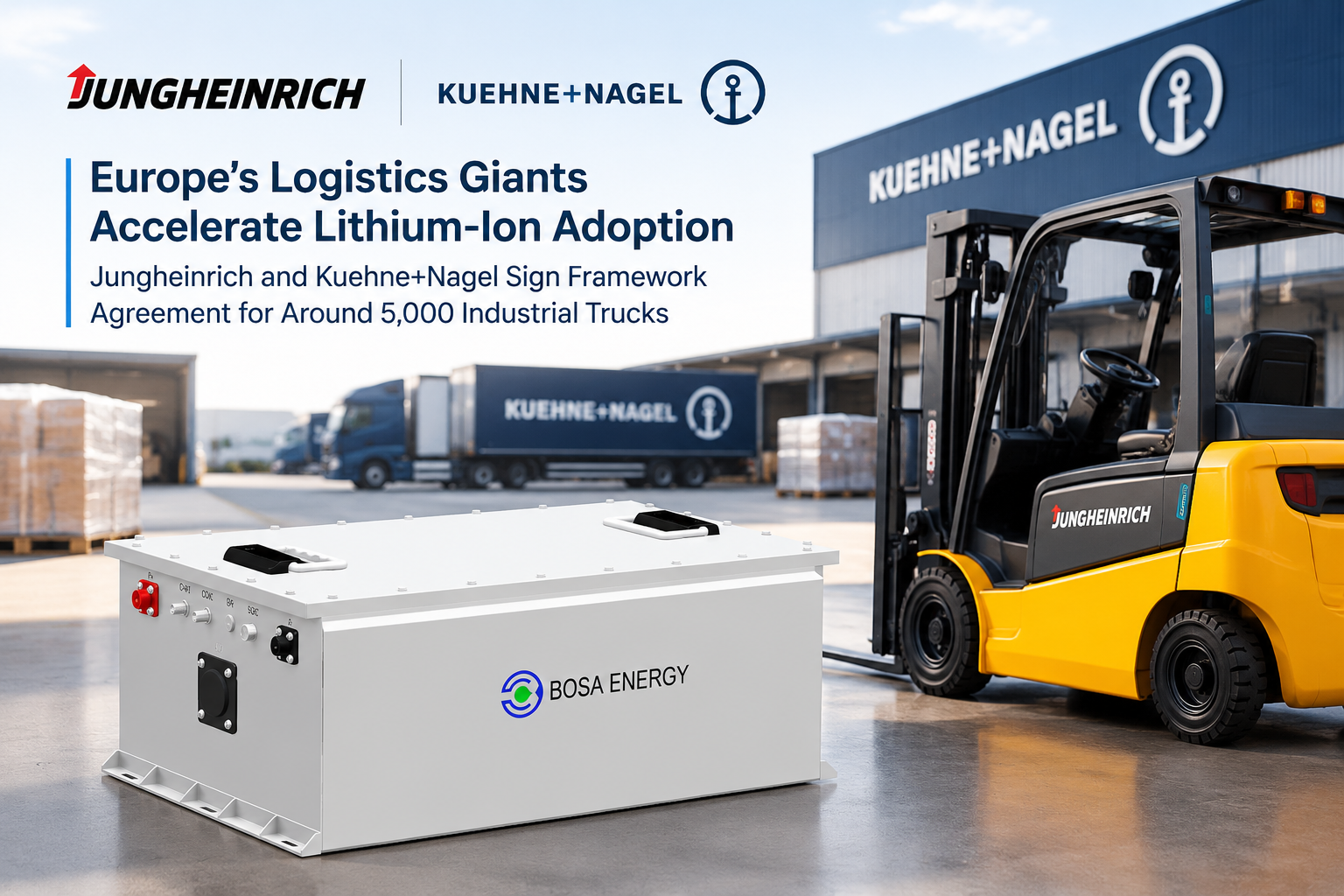
As the global logistics industry accelerates its shift toward greener operations, a major milestone has emerged in Europe’s forklift and material handling sector. On September 28, 2026, German industrial vehicle leader Jungheinrich and international logistics provider Kuehne+Nagel signed a multi-year international framework agreement covering approximately 5,000 industrial trucks. The deal applies to several European countries and prominently features lithium-ion technology.
This partnership goes beyond simple equipment supply. It signals the large-scale deployment of lithium-ion batteries in major European logistics fleets and the growing adoption of integrated rental-plus-digital fleet management models.
The Agreement: More Than 5,000 Vehicles
According to Jungheinrich’s official announcement, the framework agreement was signed by Nadine Despineux, Chief Sales Officer of Jungheinrich AG, and Eduardo Razuck, Executive Vice President Contract Logistics and Member of the Board of Management at Kuehne+Nagel.
Key elements of the agreement include:
- Scale: Around 5,000 industrial trucks from the Jungheinrich portfolio, including forklifts, reach trucks, and pallet trucks.
- Technology focus: A significant portion of the vehicles will use energy-efficient lithium-ion technology. These trucks are characterized by high availability, short charging times, and maintenance-free battery systems, making them well suited for standardized fleets operating across multiple sites.
- Service model: The vehicles will be provided under a rental and service concept based on Jungheinrich’s Rental Fleet Management system. A customized version called KN-RFM+ has been developed specifically for Kuehne+Nagel, combining a core fleet with flexibly scalable rental units under centralized digital control.
Jungheinrich already serves as a fleet partner for Kuehne+Nagel in several European countries, including France, Italy, the Netherlands, Belgium, and Luxembourg. The new framework agreement deepens this relationship and creates a foundation for expansion into additional markets.
Why Lithium-Ion? A Practical Choice for European Logistics
Europe has long maintained a high electric forklift penetration rate (approximately 85–90%). The next wave of transformation is the rapid replacement of lead-acid batteries with lithium-ion systems. Analysts such as Interact Analysis have projected that major European countries will reach the 50% lithium-ion share of electric forklift sales around 2025–2026.
The advantages of lithium-ion technology highlighted in this deal align closely with the operational needs of large multi-country fleets:
- Short charging times and opportunity charging support multi-shift operations with minimal downtime.
- High availability and maintenance-free design reduce service costs and increase overall fleet efficiency.
- Cross-site standardization simplifies management for logistics operators running warehouses in multiple European countries.
For a global logistics company such as Kuehne+Nagel, lithium-ion solutions help lower total cost of ownership (TCO) while supporting compliance with tightening EU carbon-reduction and sustainability requirements.
Digital Fleet Management: From Ownership to Optimized Utilization
Unlike traditional purchase models, this agreement relies on an integrated rental and service approach. Jungheinrich’s Rental Fleet Management system, tailored for large international customers, enables:
- A stable core fleet combined with flexible rental capacity that can be adjusted according to demand;
- Centralized digital management and performance comparison across sites and national borders;
- Higher utilization rates and greater operational transparency.
Nadine Despineux commented: “This partnership goes far beyond the provision of industrial trucks. With our Rental Fleet Management approach, we support Kuehne+Nagel in implementing an internationally consistent, transparent, and flexible fleet model that is consistently focused on efficiency.”
Eduardo Razuck added: “The challenges in logistics are evolving rapidly. By combining our operational expertise with Jungheinrich’s fleet-management capabilities, we are creating a scalable and transparent solution that allows us to respond more quickly and precisely to changing market requirements and customer expectations.”
This model shifts part of capital expenditure (CAPEX) into operating expenditure (OPEX) and uses real-time monitoring to optimize battery life and equipment utilization—trends that also resonate with the emerging Battery-as-a-Service (BaaS) concepts in the European market.
Industry Implications: Large-Scale Lithium Deployment Is Underway
The 5,000-unit framework agreement represents a significant milestone in the lithium-ion transition of Europe’s material handling industry. It demonstrates that:
- Major logistics operators are moving from pilot projects to large-scale lithium-ion forklift deployments.
- Relationships between equipment suppliers and end users are evolving from pure sales toward full-lifecycle service (equipment + rental + digital management + maintenance).
- While European OEMs such as Jungheinrich and KION Group (Linde/STILL) remain strong in the premium segment, the broader market continues to open opportunities for specialized battery suppliers.
Recent market reports project the Europe forklift battery market to grow from approximately USD 1.58 billion in 2024 to USD 2.36 billion by 2031, at a CAGR of around 6.1%. Lithium-ion batteries, fast-charging infrastructure, and service-based models are expected to be the primary growth drivers.
Conclusie
The Jungheinrich–Kuehne+Nagel framework agreement is more than a commercial transaction. It reflects the broader transformation of Europe’s industrial vehicle sector toward lithium-ion power, digital fleet management, and service-oriented models. As EU battery regulations (including carbon-footprint declarations and recycled-content requirements) take effect and logistics companies pursue both efficiency and sustainability, lithium-ion forklifts are shifting from an option to a standard.
For companies watching the European market—whether forklift OEMs, battery suppliers, or logistics operators—the message is clear: lithium-ion technology is becoming the baseline, and those who can deliver complete solutions (equipment + energy systems + digital management) will be best positioned for the next phase of competition.
Powering the Transition: BOSA Energy’s Lithium Forklift Battery Solutions
The advantages emphasized in the Jungheinrich–Kuehne+Nagel agreement—high availability, short charging times, maintenance-free operation, and lower total cost of ownership—are precisely the benefits that advanced lithium-ion battery systems deliver for European material-handling fleets.
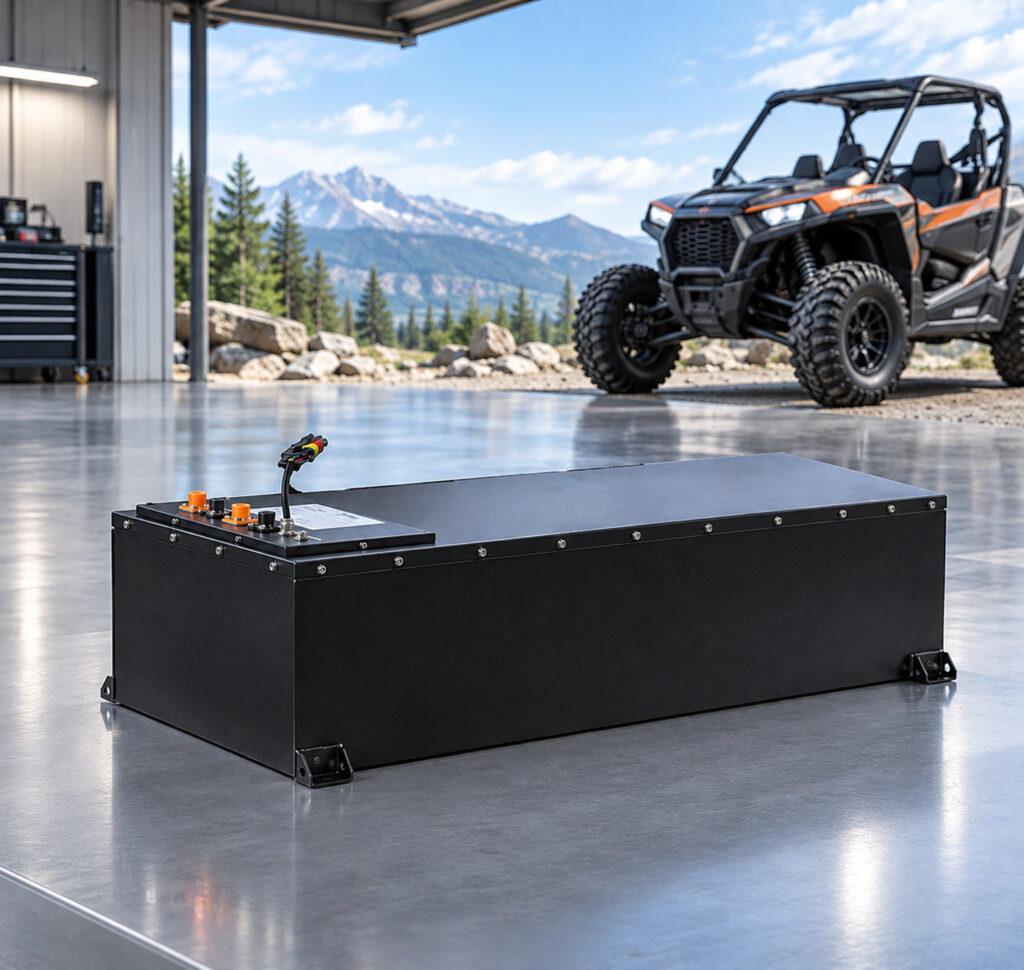
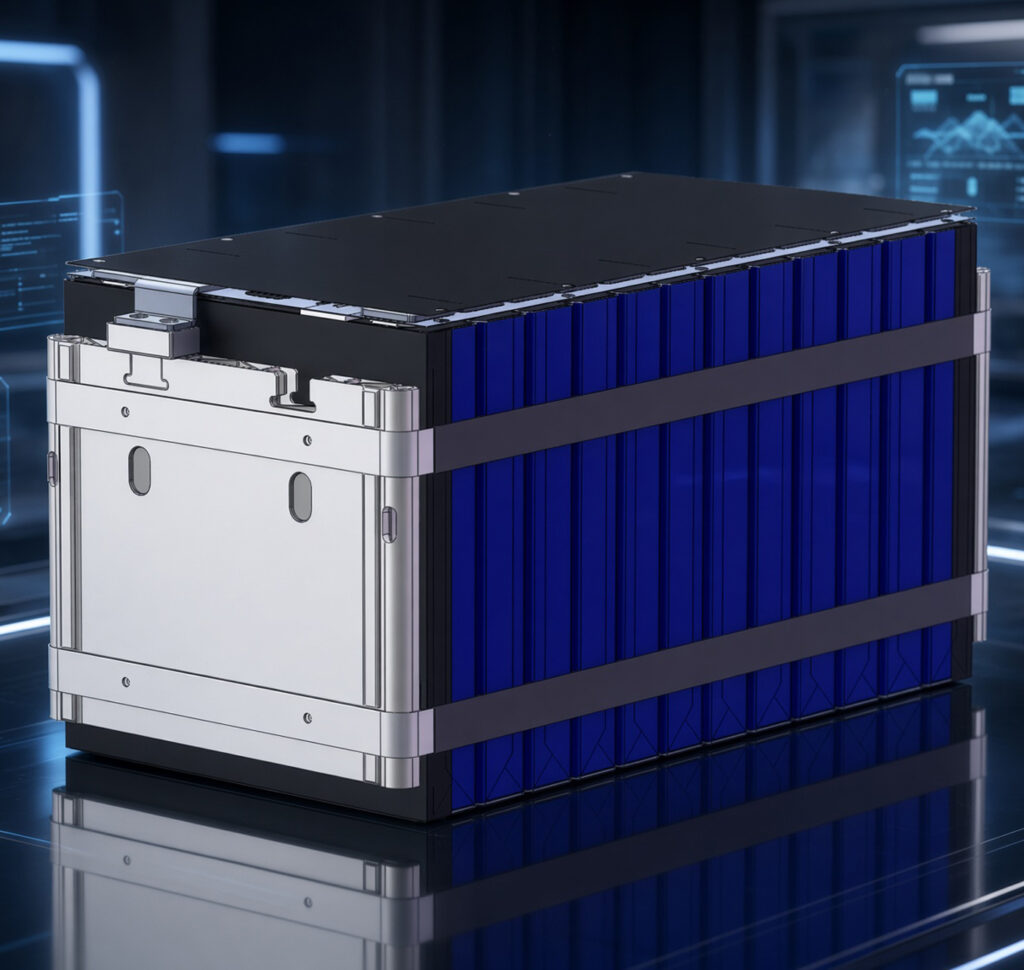
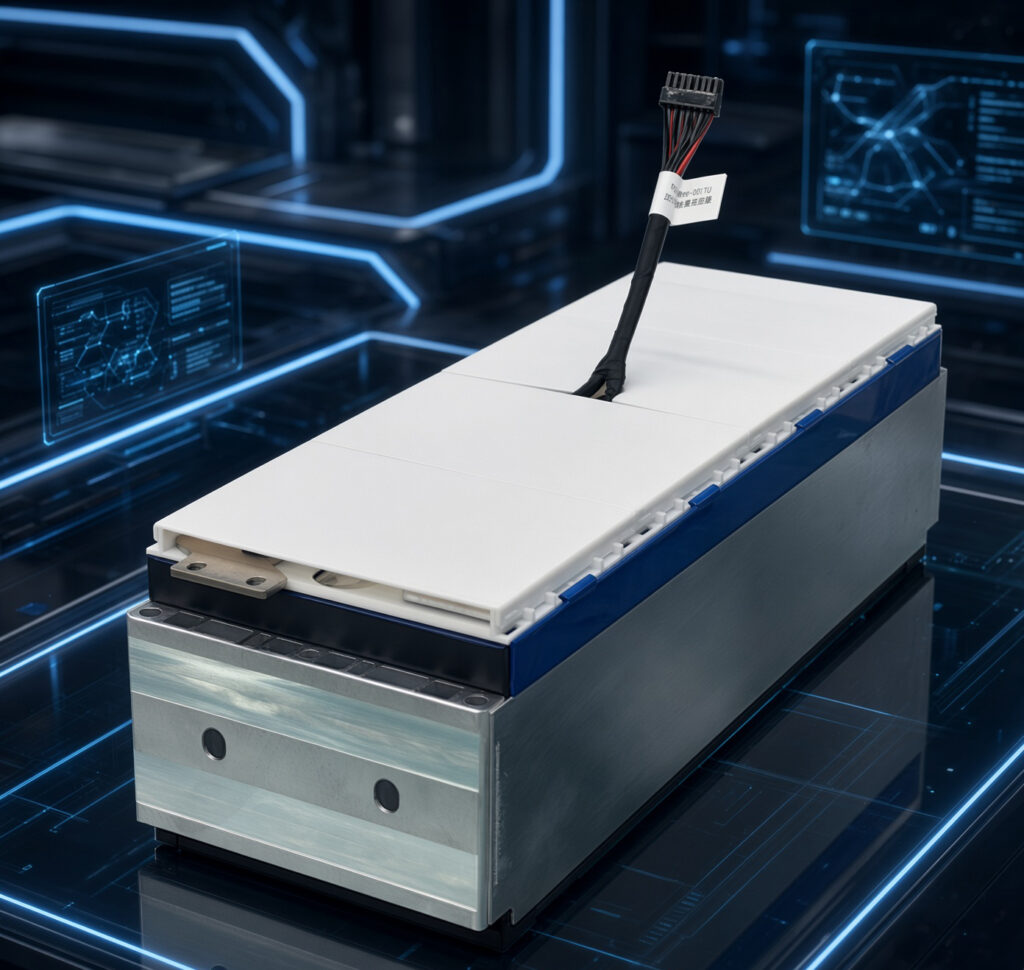
BOSA Energie, a specialized manufacturer of high-performance LiFePO4 (LFP) lithium batteries, provides drop-in and customized battery packs designed specifically for electric forklifts, pallet trucks, and other industrial vehicles. BOSA’s forklift battery portfolio features:
- Cycle life of 3,500+ cycles, significantly outlasting traditional lead-acid batteries;
- Fast charging (typically 1–2 hours for a full charge) that supports opportunity charging and multi-shift operations;
- Maintenance-free design with built-in BMS for enhanced safety and reliability;
- Broad compatibility with major forklift brands and voltage platforms (24V, 48V/51.2V, 80V, and higher);
- Solutions engineered for the demanding temperature ranges and intensive duty cycles common in European warehouses and logistics centers.
With manufacturing capabilities in China and an expanding presence supporting European customers (including stock availability in the region), BOSA Energy is well positioned to supply the high-quality lithium battery systems that enable the kind of large-scale, efficient fleet deployments illustrated by this landmark agreement.
As Europe’s logistics sector continues its lithium-ion transition, reliable battery partners such as BOSA Energy play a critical role in turning sustainability and efficiency goals into everyday operational reality.
Sources: Jungheinrich official press release (28 September 2026), Forkliftaction, industry market reports. This article is based on publicly available information and rewritten for industry insight.