
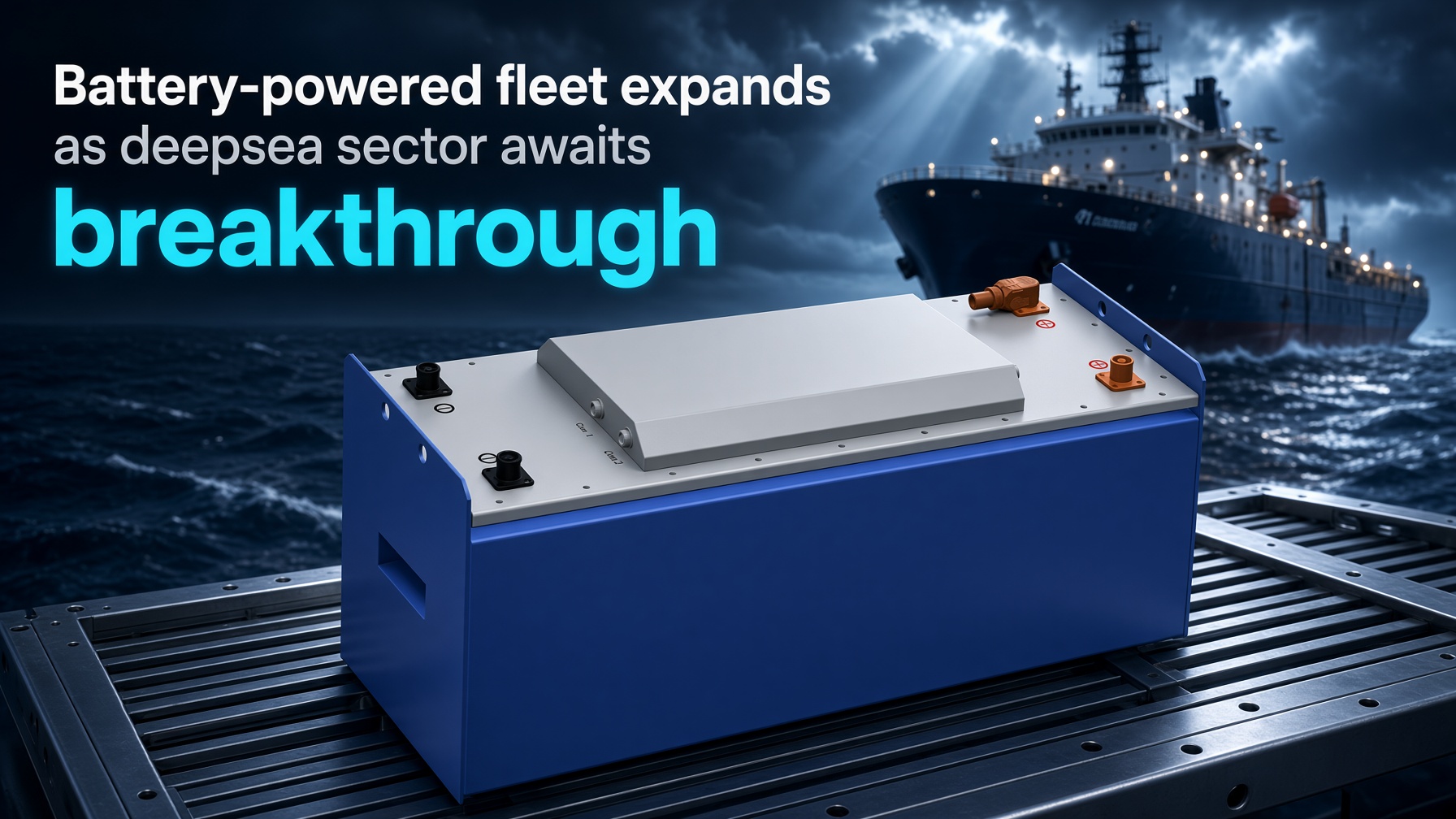
The maritime industry is witnessing a clear acceleration in electrification. As energy density improves, costs decline and safety systems mature, battery-electric propulsion has moved well beyond pilot projects and small ferries. Large ro-pax vessels, feeder containerships and dry cargo carriers are now entering service or order books with substantial lithium battery installations. At the same time, the deepsea sector continues to wait for the decisive technological step that would make full battery propulsion commercially realistic for ocean-crossing cargo ships. This tension—rapid expansion of the battery-powered fleet alongside the ongoing search for a deepsea breakthrough—defines the current moment in marine lithium battery adoption.
Industry data from the Maritime Battery Forum shows that more than 2,000 commercial vessels already carry battery systems or have them on order, representing approximately 2.4 GWh of installed capacity. Hybrid configurations account for the majority (around 68 percent), plug-in hybrids another 13 percent, and fully electric vessels roughly 18 percent. Average installed capacity has risen to about 1.5 MWh per ship, with larger installations approaching or exceeding 40–50 MWh already in operation and designs targeting 100 MWh and beyond appearing on the horizon. Passenger vessels form the largest segment, followed by offshore support ships and a growing number of cargo vessels. Norway and Europe lead the documented fleet, while China’s actual numbers are widely believed to be significantly higher than the registry currently captures.
The Rise of Lithium Iron Phosphate in Marine Service
A key enabler of this expansion is the shift toward lithium iron phosphate batteries for marine applications. LFP chemistry offers superior thermal stability, longer cycle life and lower cost compared with earlier nickel-manganese-cobalt formulations. These attributes matter greatly at sea, where fire safety, operational reliability and total cost of ownership determine whether operators will commit to large battery rooms or containerized packs. Classification societies have adapted rules accordingly; battery rooms using LFP can now accommodate installations up to 25 MWh under current guidelines, reflecting growing confidence in the technology.
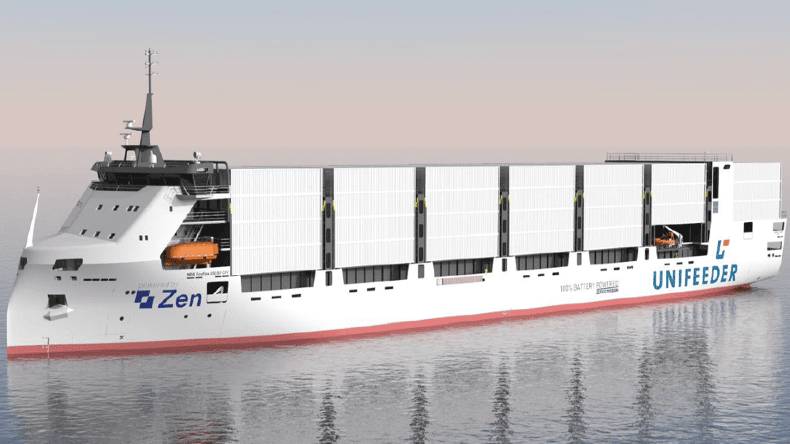
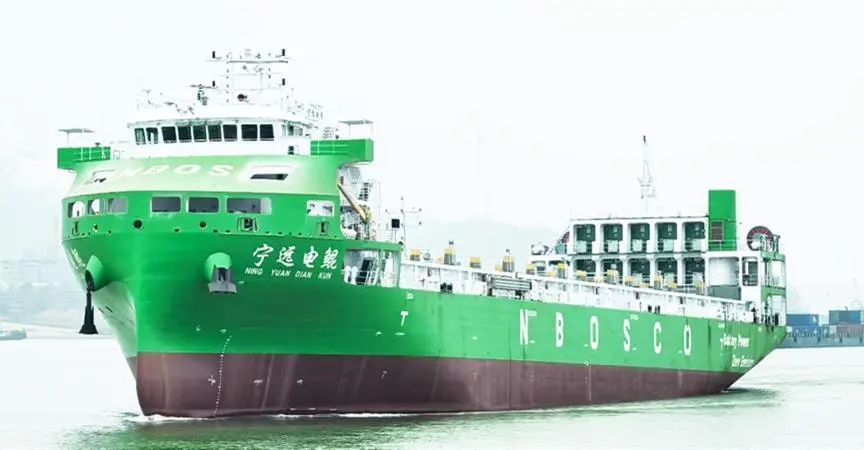
Norwegian shipowner Eitzen Group’s order for two 900 TEU fully electric containerships illustrates the new scale. Expected for delivery in 2028, each vessel will carry battery packs sized for ranges of up to 600 nautical miles, sufficient for routes such as Oslo–Hamburg. This is a substantial step beyond earlier electric containerships. In China, Ningbo Ocean Shipping has taken delivery of 740 TEU vessels fitted with ten containerized battery units, supporting inland and short-sea services at speeds up to 11.5 knots, with both high-voltage shore charging and rapid battery swapping. Cosco has likewise ordered fully electric inland and coastal boxships, reinforcing the pattern of battery-powered feeder containerships moving from concept to contracted tonnage.
Offshore wind support is another growth area. Bibby Marine recently launched a battery-first commissioning service operation vessel whose primary power source is the battery bank rather than a conventional hybrid arrangement. The design, developed with partners including Kongsberg and Corvus Energy, aims for substantial operating-cost reductions once offshore charging becomes routine. Such projects demonstrate that operators are already designing vessels around lithium storage rather than treating batteries solely as an add-on for peak shaving.
Why Deepsea Remains Different
Despite this progress, fully electric deepsea cargo ships remain technically and commercially difficult. Energy requirements for multi-week voyages would demand battery volumes that occupy a large fraction of available cargo space, while ports would need charging infrastructure of an entirely different magnitude. Experts have quantified the gap. A vessel drawing 10 MW of propulsion power for four weeks would require close to 7,000 MWh of stored energy—translating, with present technology, into tens of thousands of tonnes of batteries. Even with continued annual energy-density gains of roughly 5 percent, the physics and economics of pure battery propulsion for transoceanic trades stay challenging.
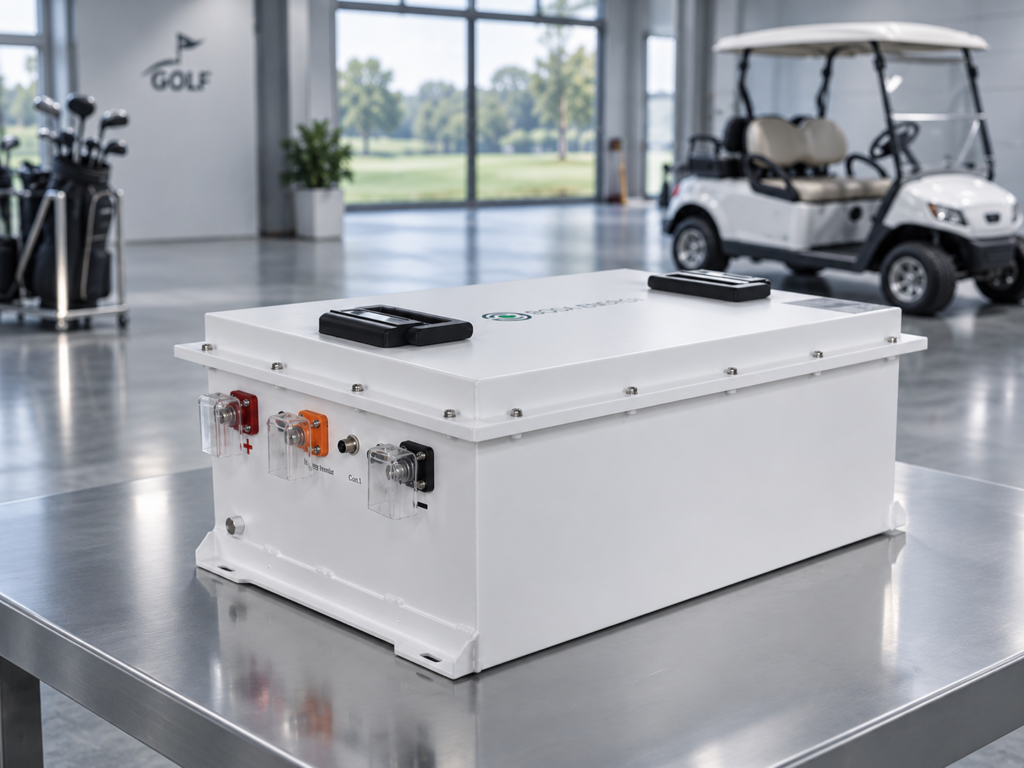
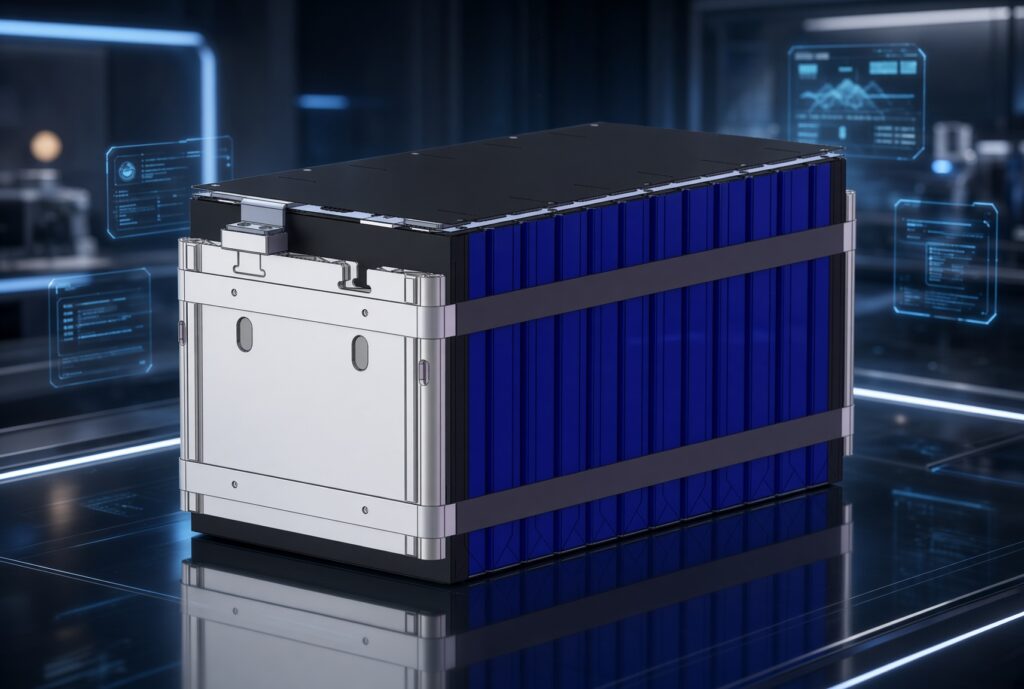
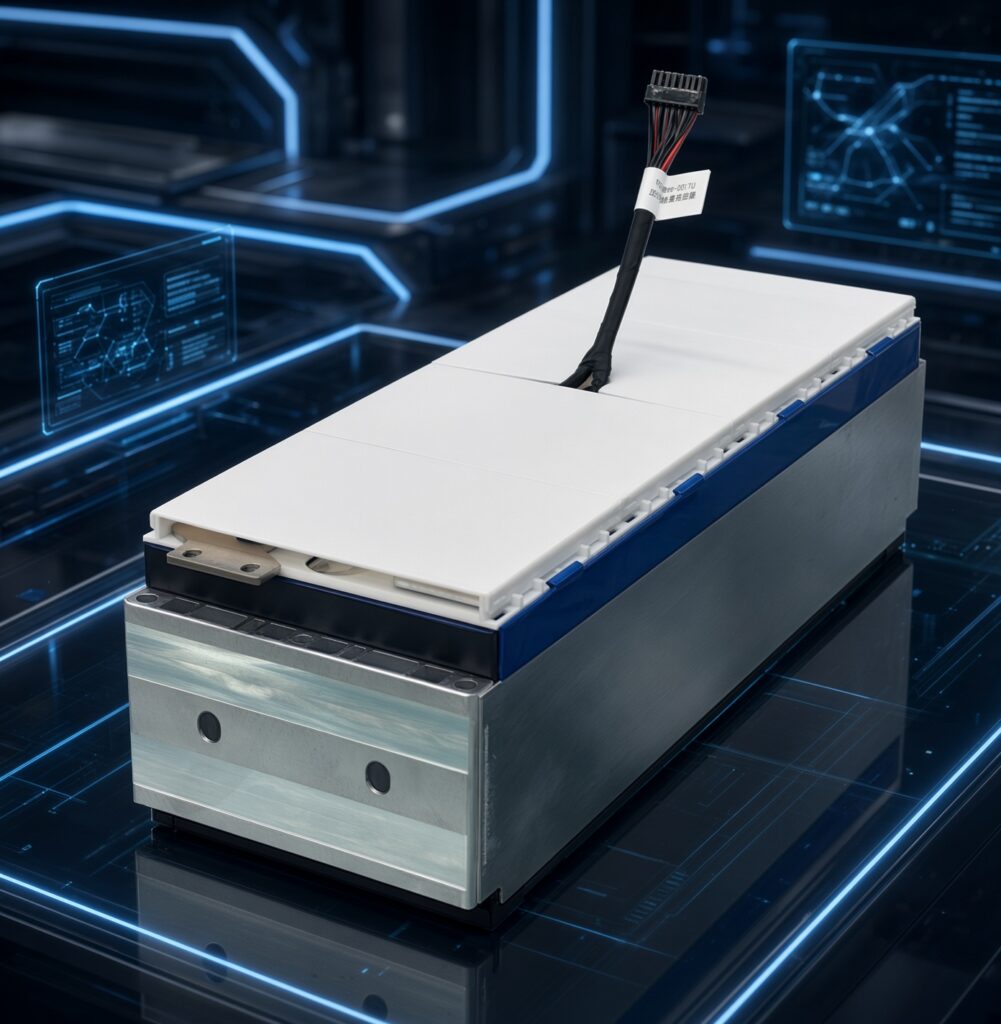
Consequently, the most realistic near-term role for lithium systems on deepsea ships is within deepsea hybrid energy storage systems. Batteries support blackout prevention, peak shaving, load optimization and zero-emission operation in port or during short coastal segments. They complement engines running on fossil, bio or alternative fuels rather than replacing them. Modular and containerized battery units for electric vessels further improve flexibility: packs can be loaded, swapped or upgraded with minimal disruption to vessel operations, and immersion-cooling concepts under development promise to roughly double volumetric energy density by eliminating bulky air or plate cooling hardware.
Major battery manufacturers such as CATL have stated ambitions to see oceangoing battery-electric vessels within a few years and have already supplied large packs for river cruise ships and inland cargo vessels, including containerized swap systems. While these statements reflect genuine technological momentum, industry consensus remains that pure battery deepsea cargo ships are still years away. The breakthrough that would change the equation would combine higher energy density (solid-state or next-generation lithium chemistries), safer large-scale thermal management, and port-side infrastructure capable of delivering multi-hundred-megawatt charging or rapid pack exchange at major hubs.
Lithium Batteries at Extreme Depths
The deepsea sector is not solely about surface cargo ships. Specialized pressure-tolerant lithium batteries for deep-ocean vehicles already power manned submersibles and AUVs to full ocean depth. Systems from companies such as ICTINEU Submarins have been certified to 6,000 m and higher, with continuous current capabilities suited to the heavy loads of large subsea platforms. Chinese HOVs have reached the Mariana Trench using pressure-resistant lithium packs of 100+ kWh. These applications prove that lithium chemistry can be engineered for the most extreme marine environments; the remaining challenge is scaling energy density and cost for the vastly larger energy budgets of surface deepsea freighters.
Battery-powered fleet expands as deepsea sector awaits breakthrough is therefore both a description of current reality and a statement of the industry’s central technical and commercial question. Short-sea, coastal, inland and offshore segments are scaling rapidly on the back of LFP and modular lithium systems. Ocean-going pure battery propulsion still requires a step-change in energy density, safety at multi-hundred-MWh scales, and charging infrastructure. Hybrid systems, containerized packs and continued chemistry improvements are bridging the gap today while the industry watches for the breakthrough that would open the deepsea trades.
Domande Frequenti
What is driving the expansion of battery-powered vessels? Falling battery costs, improving energy density, better thermal safety of LFP chemistry, and regulatory pressure to cut emissions. Economic viability for short-sea and coastal routes has already been demonstrated.
Why are fully electric deepsea cargo ships still difficult? The energy required for multi-week voyages would occupy too much cargo space with today’s energy density, and ports lack the charging infrastructure needed for very large battery packs.
Are LFP batteries preferred for marine use? Yes. Lithium iron phosphate offers excellent thermal stability, long cycle life and lower cost, making it suitable for large installations where safety and durability are critical.
What role do hybrids play on deepsea ships? Hybrids provide peak shaving, spinning reserve, blackout prevention and zero-emission operation in port or coastal waters while the main engines continue to supply the bulk of propulsion energy.
When might pure battery deepsea ships become realistic? Most analysts place meaningful commercial viability several years away, dependent on further gains in energy density, solid-state or advanced lithium chemistries, and large-scale port infrastructure. Some manufacturers have projected oceangoing electric vessels within roughly three years for more limited ranges.
Related Links
- Lloyd’s List analysis: Battery-powered fleet expands
- Maritime Battery Forum Ship Register overview
- International Chamber of Shipping: Powering the long haul – batteries at sea
- Corvus Energy marine battery systems
- CATL marine electrification developments
- ICTINEU Submarins pressure-tolerant lithium systems